


“Chinese Engineers Just Built Death Machine”: EV Battery Launches Like Missile During Emergency While Safety Experts Fear The Projectile Revolution Kills Pedestrians
 By
Renée Castellano
By
Renée Castellano
| IN A NUTSHELL |
|
The recent viral video showing an electric vehicle (EV) battery being ejected from an SUV has sparked widespread debate and concern. This controversial safety test took place in China, revealing an innovative yet contentious approach to handling potential battery fires. As EV fires continue to challenge carmakers globally, the Chinese prototype system aims to protect passengers by ejecting the battery at high speed during emergencies. However, the concept has raised questions about its practicality and safety implications. This article delves into the details of the test, public reactions, and the broader context of EV safety innovations.
The Battery as a Projectile
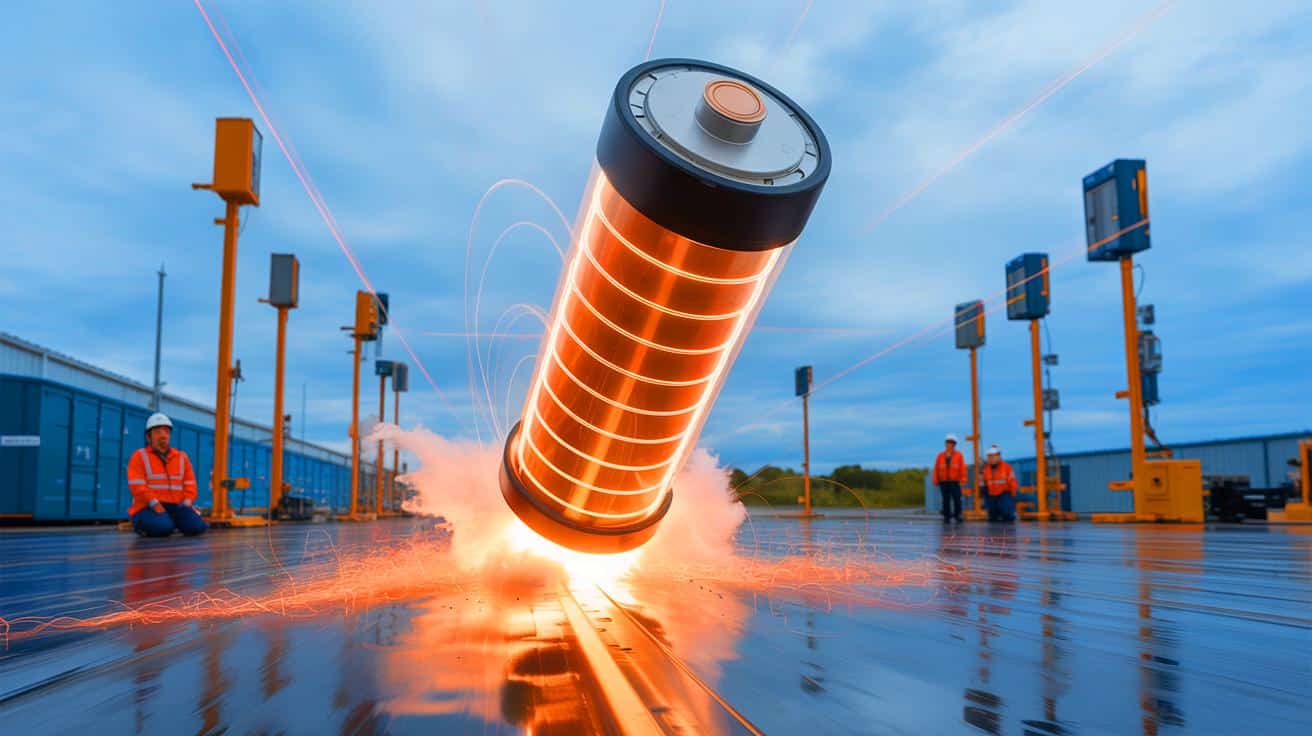
The viral video capturing the battery ejection has become a focal point of discussion on Chinese social media. In the clip, a large battery is seen being launched from the side of an SUV, landing in a controlled test area. Within moments, smoke emerges from the battery, prompting safety workers to intervene with fire blankets. Described as working similarly to an airbag, the system activates when sensors detect a thermal runaway, ejecting the battery within a second.
The battery travels approximately 10 to 20 feet, suggesting a significant force behind the ejection. Proponents argue that distancing the battery from the vehicle reduces immediate danger to passengers. However, critics highlight the unpredictable nature of such a system in real-world traffic conditions. The weight and trajectory of the battery could pose significant hazards, potentially causing more harm than the fire itself.
Safety or New Hazard?
Public reactions to the test have been polarized. While some view it as an innovative approach, many express concerns about the potential dangers. Critics describe the system as potentially the "most dangerous safety system ever designed." There are fears that in severe accidents, where battery fires are most likely, the vehicle's structure could prevent successful ejection, leaving passengers vulnerable to both collision and fire risks.
The feasibility of this system functioning effectively in real-world conditions is also questioned. The chaotic nature of crashes makes precise ejection challenging. In addition, the complexity of the launcher system could increase vehicle costs without providing significant safety benefits in most scenarios. These concerns underscore the need for further evaluation and testing before such a system could be considered viable.
Who Staged the Test?
Investigations into the origins of the test suggest it was organized by the China Automotive Collision Repair & Technology Research Center. The event, dubbed the "Power Battery Launch Technology Demonstration and Exchange Meeting," took place on September 19, 2025. The vehicle used in the demonstration bore resemblance to the iCar 03T, leading to speculation about the automaker's involvement.
However, the automaker quickly distanced itself from the project, issuing a statement on social media clarifying their non-involvement. Similarly, Joyson Group, another company linked to the project, denied any participation. Despite the controversy, the demonstration has emphasized the need for innovative solutions to EV fire risks while highlighting the challenges of balancing innovation with safety.
Volkswagen Unleashes Its Own Epic Gymkhana Video – A Thrilling Ride!
The Future of EV Safety Innovations
As the automotive industry continues to grapple with the challenges of EV safety, this test underscores the complexity of developing effective solutions. While the idea of ejecting a battery to prevent fire hazards is novel, the potential risks associated with such a system may outweigh the benefits. Industry experts emphasize the importance of focusing on safer designs, stronger materials, and advanced fire suppression technologies.
The ongoing development and refinement of EV safety systems are crucial as the world increasingly transitions to electric transportation. The controversy surrounding the battery ejection test serves as a reminder of the importance of rigorous testing and evaluation in the pursuit of safer and more reliable EV technologies. How can industry leaders balance the drive for innovation with the imperative of ensuring public safety?