


“They Wanted $100,000 for It”: Tesla’s Cybertruck Faces Price Cuts and Production Chaos as Buyers Back Out (and Rivals Close In)
 By
Avi Cohen
By
Avi Cohen
| IN A NUTSHELL |
|
The launch of Tesla’s Cybertruck was marked by high expectations and a promise of a futuristic experience. However, the reality has been quite different from the initial vision. With fewer buyers following through on their reservations and significant price cuts already underway, the Cybertruck’s journey is becoming a case study in market dynamics and consumer behavior. As the electric vehicle landscape evolves, Tesla is grappling with challenges that include fierce competition, production hurdles, and a need to recalibrate its pricing strategy.
From $39,900 to $100,000 : and Back Down Again
When Tesla’s CEO Elon Musk unveiled the Cybertruck in 2019, the announcement included an enticing starting price of $39,900. This pricing strategy was designed to capture a significant share of the burgeoning electric pickup market. However, by the time the Cybertruck entered production in 2023, the base price had surged to $60,990, reflecting a nearly 50% increase. This shift was not just a matter of inflation or increased production costs; it was also a strategic move to position the Cybertruck as a premium vehicle.
Early deliveries of the Cybertruck included versions with price tags exceeding $100,000, loaded with advanced features aimed at tech enthusiasts and early adopters. Despite Tesla’s strong fan base and a staggering 1.9 million reservations, conversion rates from pre-orders to actual sales were disappointingly low, with fewer than 5% resulting in purchases. The market’s reality, combined with robust competition, challenged Tesla’s initial pricing assumptions and forced a reevaluation of its strategy.
A Tough Market and an Even Tougher Production Process
Tesla’s entry into the electric pickup market coincided with the launch of other competitive models like the Ford F-150 Lightning and GMC Hummer EV. These vehicles offered compelling features and more traditional designs at competitive prices, providing potential Cybertruck buyers with viable alternatives. This competition was more intense than Tesla had anticipated, leading many consumers to reconsider their options.
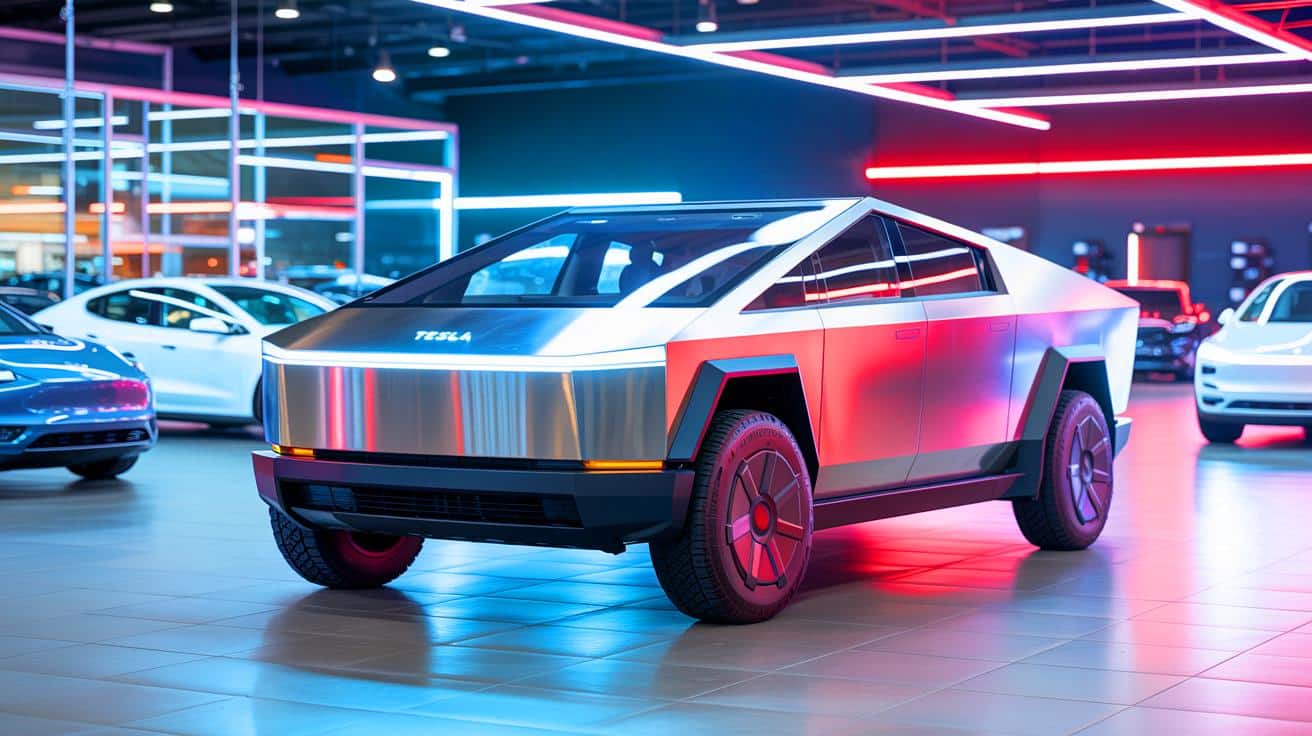
Compounding these market challenges were the production difficulties inherent in the Cybertruck’s design. The vehicle’s stainless steel exoskeleton, while visually striking, resulted in manufacturing complexities that Tesla had not fully accounted for. The unique, sharp-edged, unpainted design introduced technical hurdles that slowed production and increased costs. These factors necessitated a strategic shift in pricing and production methods to sustain the Cybertruck’s viability in the market.
Tesla’s Pivot: Price Cuts and Damage Control
In response to sluggish sales, Tesla implemented significant changes to its pricing strategy. Previously high-end Cybertruck models, initially priced up to $100,000, were reclassified as standard models. This move effectively reduced prices, making the Cybertruck more accessible to a broader audience. The decision to lower the price points was not just about increasing sales; it was a necessary measure to align with market expectations and competitive pressures.
Beyond revising prices, Tesla is actively working on reducing production costs. However, the unique stainless steel construction remains expensive and presents challenges in scalability. Achieving manufacturing efficiencies will be crucial for Tesla to maintain profitability while offering more competitive pricing. This strategic pivot reflects Tesla’s adaptability and commitment to sustaining the Cybertruck’s market presence despite initial hurdles.
Can the Cybertruck Still Be a Hit?
The reduction in prices has helped renew interest in the Cybertruck, but significant questions remain about its profitability. Unlike Tesla’s previous models, the Cybertruck’s distinctive design and high production costs present unique challenges. While the initial hype surrounding the vehicle remains, Tesla must now demonstrate that the Cybertruck can thrive in practical applications, not just in pre-order excitement.
The landscape of the electric truck market is rapidly evolving, and Tesla’s future actions will determine whether the Cybertruck becomes an iconic success or a cautionary tale in the electric vehicle industry. With the market still open, Tesla’s strategic decisions will be pivotal in shaping the Cybertruck’s legacy. How will Tesla navigate these challenges, and what does the future hold for this ambitious project?